
Which jobs are least exposed to AI?
The occupations least exposed to generative AI are those built on physical, hands-on, caring or in-person work. This free whitepaper lists 50 of them that BLS projects to grow at least as fast as average, across education levels, with pay, growth and employment.
No job is AI-proof. The list ranks occupations by how exposed their work looks to generative AI in O*NET data, keeps only those growing at or above the all-occupations average with at least 20,000 jobs, and takes ten from each education level where it can.
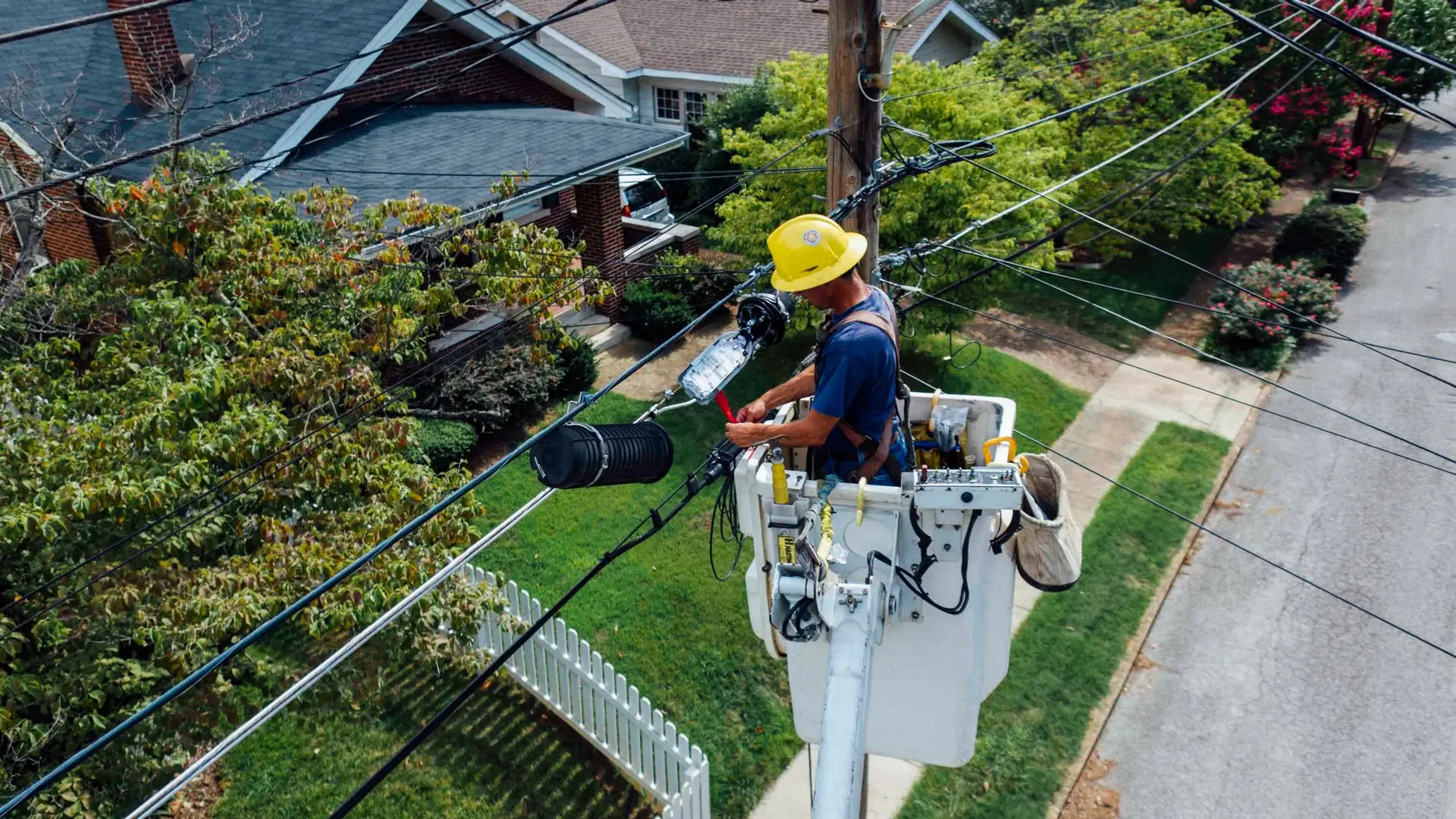
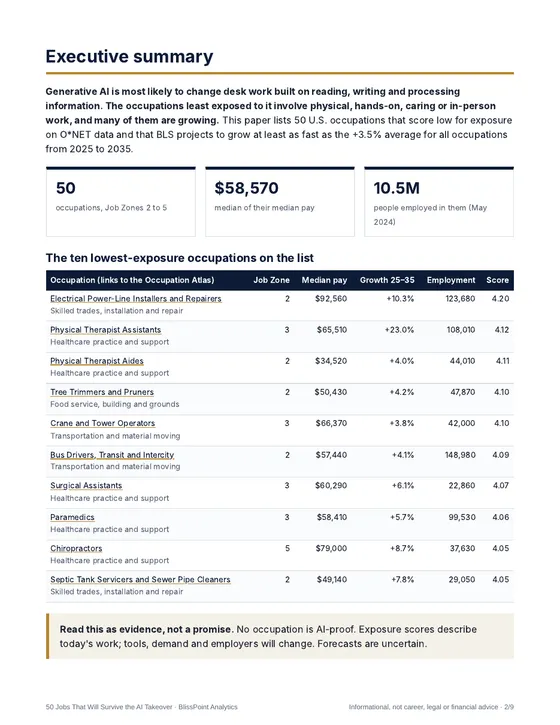
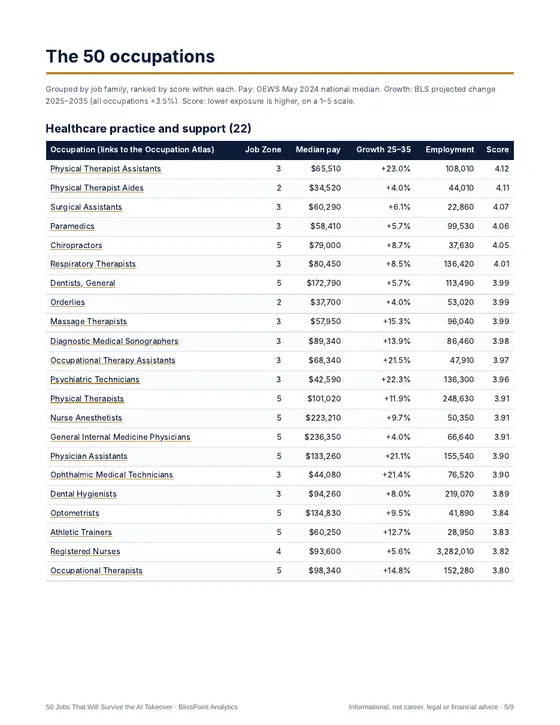
The ten highest scorers include electrical power-line installers and repairers (median pay $92,560, growth +10.3%), physical therapist assistants (+23.0%), crane and tower operators, transit and intercity bus drivers, surgical assistants and paramedics. Healthcare practice and support supplies 22 of the 50, skilled trades eight, and personal care and community services eight.
How the 50 jobs were chosen
Every number comes from data the U.S. government already publishes and that is bundled with the free Occupation Atlas: BLS Occupational Employment and Wage Statistics for May 2024, BLS Employment Projections for 2025 to 2035, and O*NET 31.0. The steps are deterministic, so running them again on the same data returns the same list.
A lower-exposure score from O*NET
Studies of generative AI exposure find the most exposed work is information processing at a desk, and the least exposed is physical, hands-on, caring and in-person work. The score turns that into O*NET ratings: hands-on work, caring for others and in-person contact count up; processing information, working with computers, documenting and administrative work count down.
Fifty across education levels
The list takes the ten highest scores in each O*NET Job Zone, so it is useful to people at different stages. No Job Zone 1 occupation met the growth and employment tests, so the 50 span Job Zones 2 to 5, from orderlies and roustabouts to physician assistants and nurse anesthetists.
What outside research says about AI and jobs
BLS builds AI into its projections the way it treats other technologies, adjusting an occupation only where its research gives clear expectations. In its 2024–34 projections, it expects AI adoption to support growth for software developers (+15.8%) and data scientists (+33.5%), while customer service representatives fall 5.5%. Lower exposure is not the only route to a growing career.
The ILO's 2025 global index finds about one in four workers worldwide in an occupation with some generative AI exposure, but only 3.3% in the highest exposure group, and judges transformation more likely than elimination. Employers surveyed for the World Economic Forum's Future of Jobs Report 2025 expect about 170 million jobs created and 92 million displaced worldwide from 2025 to 2030. The OECD's broader automation measure is a reminder that low exposure to generative AI is not the same as low exposure to all automation.
How to use the list
Read it as evidence, not a promise. The score describes the nature of the work as O*NET rates it today; it does not model robotics, regulation, demand or wages. Use it to compare occupations and choose a few to research, not to predict any one person's future.
For students, recruits and career changers
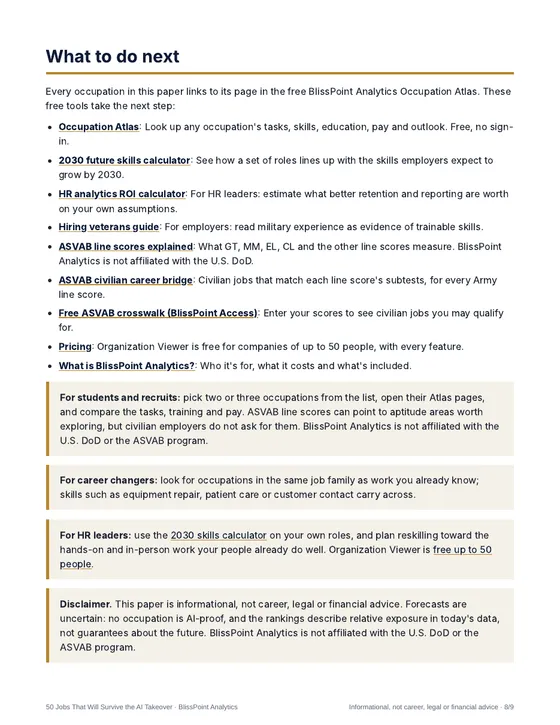
Pick two or three occupations, open their Atlas pages and compare tasks, training and pay. Look for occupations in the same job family as work you already know; equipment repair, patient care and customer contact carry across. If you are weighing military training, the ASVAB line scores explained guide shows which aptitude areas point toward which work.
For HR leaders
Run the free 2030 skills calculator on your own roles, and plan reskilling toward the hands-on and in-person work your people already do well. The companion paper Top 5 Job Categories After AI shows the same evidence by job family, and AI Workforce Readiness: A CHRO's Guide turns it into a plan.
Informational, not career, legal or financial advice. Forecasts are uncertain, and no occupation is AI-proof.
Frequently asked questions
Is any job AI-proof?
No. These lists rank occupations by how exposed their day-to-day work looks to generative AI in O*NET data today, among occupations BLS projects to grow. Tools, demand and employers will change, and forecasts are uncertain.
Where do the numbers come from?
Median pay and employment are BLS Occupational Employment and Wage Statistics for May 2024. Growth is the BLS projected change for 2025 to 2035, against +3.5% for all occupations. Work activities and context are from O*NET 31.0.
Is this career advice?
No. The papers are informational, not career, legal or financial advice. Use them to choose occupations to research, then read each one's Occupation Atlas page.
How were the 50 jobs chosen?
Occupations with at least 20,000 jobs and projected growth at or above the all-occupations average were scored on O*NET ratings for physical, equipment, caring and in-person work, minus routine information processing. The ten highest in each Job Zone were taken, with shortfalls filled by the next highest scores.
Which jobs are least exposed to generative AI?
Work that is physical, hands-on, caring or in person. Among growing occupations, the list's top scorers include electrical power-line installers and repairers, physical therapist assistants, crane and tower operators, transit and intercity bus drivers, surgical assistants and paramedics.
Does the list include jobs that need a degree?
Yes. It takes the ten highest scores in each O*NET Job Zone where it can. No Job Zone 1 occupation met the growth and employment tests, so the 50 span Job Zones 2 to 5, from orderlies and roustabouts to physician assistants and nurse anesthetists.
Sources
- U.S. Bureau of Labor Statistics: Occupational Employment and Wage Statistics, May 2024
- U.S. Bureau of Labor Statistics: Employment Projections, 2025–35
- U.S. Bureau of Labor Statistics: Incorporating AI impacts in BLS employment projections (Monthly Labor Review, February 2025)
- U.S. Bureau of Labor Statistics: AI exposure categories
- O*NET 31.0 Database, National Center for O*NET Development